


This essay is from A Paper Orchestra. The full collection is available in print, eBook, and audiobook.
Sally is an elderly woman, and we exchange pleasantries on days that we haul our trash bins to the curb.
“Good morning, Mike.”
“Hi, Sally.”
We both wave, so neighborly, from behind the fetid remains of the nastiness we don’t want in our homes. It’s all very Norman Rockwell–esque if you don’t dig much deeper. From far away, I doubt Sally can see me wince when she refers to me as Mike. I’ve never introduced myself that way, and no one ever calls me that. I’m Michael. I haven’t called myself “Mike” since I was a child, because it was easier to spell than “Michael” and impossible to rhyme with “motorcycle.” Odder still is how Sally addresses the rest of my family. We discovered this one Christmas when she left a gift on our doorstep. At first, I reacted with dread, thinking that now we had to give her something in return. But then we unwrapped it and realized it was just a tin of pumpkin-spice cocoa that she was clearly re-gifting.
“Why leave cocoa in my garbage,” she must’ve thought, “when I can give it to the neighbors, and they can leave it in theirs.” In the end, it wasn’t the cocoa that was the gift, it was my subsequent discovery that despite living next to us for 20 years, Sally didn’t know any of our names. In the card that she attached, she referred to me as “Mike.” Cynthia was “Cindy.” Roxy, which is the name on her birth certificate, was “Roxanne,” and Lola had the worst name of all. She was simply called “Roxanne’s sister.” I laughed my ass off when I read that part. I imagined Sally sitting at her kitchen table, scribbling her little Christmas card, then straining to remember Lola’s name before finally giving up. “Eh, fuck it. I’ll just call her ‘Roxanne’s sister.’”
This became the Christmas gift that kept on giving, as it provided me with endless opportunities to troll my daughters. At bedtime I’d tuck them in and affectionately say, “I love you, Roxanne,” before adding, dismissively, “You too, Roxanne’s sister.” The joke got old fast, but that didn’t stop me from beating it to death when Roxy forgot to bring her dishes to the sink.
“Shame on you, Roxanne. Why can’t you be more like Roxanne’s sister!”
Despite getting so much enjoyment out of Sally’s mishandling of all our names, I was also indignant. How could someone live next door to a person for all these years and never bother to learn their name? It’s just wrong. And like a true hypocrite, a few years later, I was guilty of the same exact crime. This came to light when I broke the news to Cynthia that tragedy had struck our neighborhood.
“Did you know that what’s-his-face died?” I said, completely in shock.
“Who?”
“The creepy guy two houses down.”
“What creepy guy?”
“Undead Fred.”
“Undead Fred” is what I’d been calling our neighbor for years, even though the name was only half accurate. The Fred part was not true. His real name might have been Steve or Louis for all I know, but I’m certain he was undead. He had a ghoulishness about him. Tall and bony, he looked like a human whisper—something that would emerge from a fog holding a scythe. It wasn’t a black robe that he wore, but rather a dirty tank top—a wife beater—that accentuated the concave divot in his chest. I imagine that’s where the cannonball hit him two centuries ago. His bushy, dark eyebrows were awnings over his eyes, casting shadows on a face that was as gray as highway cement. Due to how skinny he was, his cheekbones were also sunken, giving his mouth a sort of reverse smile—as if he was only happy to see the far side of his throat. And dangling from his yellow, cadaverous fingers was his constant and only companion—a lit cigarette with a long ash that was afraid to let go because of what might happen next. “Spooky” is how I’d describe Undead Fred, if for some reason I was roped into filling out his Tinder profile.
For the two decades that we lived next to him, Undead Fred never aged. Not one day. He was an eternal 4,000 years old. Whereas we moved into our home in 2001, he’d been living in his run-down shit shack since before man had calendars. None of us in the neighborhood had ever been inside his home, but we all assumed there had to be a well in one of the bedrooms.
“How deep do you suppose it is?”
“Deep enough so that we can’t hear the screams.”
One night, the stillness of our quiet little street was broken by the arrival of several squad cars. The police swarmed his house as sirens blared and neighbors poured out of their homes. “Go back inside,” we were told, and I happily obliged, preferring to be the kind of lookie-loo that peeks at the world from behind closed curtains. The next morning, the rumor on the street was that Undead Fred’s teenage son was visiting him, and they got into a heated altercation, culminating with them pulling guns on each other. As shocking as that sounds, all I could think was, “Wait a minute. Someone fucked Undead Fred???”
“Well, 16 years ago,” said my neighbor Michelle. She lived across the street. “Can you imagine pointing a gun at your own son?”
“Hold on,” I interrupted. “Was it consensual?”
A few days later, when the gun smoke had cleared, Undead Fred retook his familiar station—pacing in his front yard, summoning the apocalypse. The reason why he had time to do this was because he was on disability, although, outwardly, he didn’t seem to have any physical ailments. The problem, I decided, must’ve been on the inside—cowering behind the black olives he called eyeballs. And so he passed his days standing on the patch of dirt that once was his front lawn, trying to resurrect the grass with his phantom powers. It was eerie seeing him lurking there, in front of his house, where the windows were never open and the drapes were always shut. What was he hiding? What was he not being honest about?
When Lola was younger, I tried to convince her that Undead Fred was a ghost that only I could see. We drove past him one morning, and my eyes went wide in horror.
“Oh my God!”
“What?”
I pretended to be too terrified to speak. “It’s a … ghost!”
“That’s so mean, Dad. Don’t even.”
“So you see him, too, child! Heavens, I thought I was the only. Be gone, apparition!” I shouted.
“Have you even talked to him?” Lola admonished me. “He might be a nice guy.” Lola is much kinder than I am, and she doesn’t like it when I make fun of people, which rules out half of everything that comes out of my mouth. I suppose I could’ve apologized, if for no other reason than to prove that I can be a good person. But getting her to laugh is more important to me, so I really had no choice but to push even further.
“Yeah, you’re right. Undead Fred probably has the heart of a child.” I added, “In a pickle jar in the basement.” And then came the laugh that I so desperately craved.
All that seems less funny now that Undead Fred is Newly Dead Fred. Death has a way of sapping the joy out of so many things. It also makes you reflective. Since his passing, I can’t help but to recount our interactions, as brief as they were. Our street hosts a neighborhood block party every few years. At one of them, I recall spotting Undead Fred leaning against a telephone pole, near the barbecue. He was holding a hot dog up to his mouth, and it looked like he was about to bite eternal life into it.
“Come hither,” he whispered to the hot dog. “Don’t you want to live forever?”
Seeing Undead Fred standing there, awkward and alone, made me feel bad for him. Not bad enough to do anything about it, of course. But throughout the day, I did watch him from the corner of my eye. At one point, I saw him talking with another neighbor. I felt relieved that I wouldn’t have to be the one to make him feel welcome. There was just something about Undead Fred that wouldn’t allow me to approach. Whatever secrets he was hiding, I didn’t want to know. So to put distance between us, I made jokes about him—but only behind his back. I wouldn’t have had the courage to do it to his face, so compromises had to be made. I wasn’t cruel about it, though. And it’s not like he was aware that I made fun of him. I wasn’t the popular cheerleader snickering at the nerdy girl, hoping to make her cry. Nothing I said or did was intended to hurt him. And if Undead Fred somehow sensed that, that’s on him. Without proof, he was just being paranoid.
Only once did I make small talk with Undead Fred, and that was because I had no choice. I was walking our dog when she, oblivious to societal decorum, pissed on his lawn. Right in front of his face. The ghoul was only a few feet from his rotting front door, raking leaves over what might have been a freshly dug grave. His gaze slowly raised from the pile, then over toward me, where it grabbed at my neck and began choking me. I tugged at my dog’s leash so she could feel it, too.
“You just had to piss on his yard,” I muttered under my breath. Undead Fred stared at me, but it was impossible to tell if he was angry or aroused. His look was blank, encouraging me to feel whatever emotion was most handy. Terror was the first thing I pulled out of my pocket.
“Sorry about that,” I said awkwardly as Undead Fred scraped the metal teeth of his rake against the sunbaked dirt. He paused, his lips pursing as his mind formulated what to say. I braced for what would come from his mouth. Maybe a swarm of bees. Finally, from deep within his stomach, he growled, “That’s a golden retriever.”
His gravelly words cascaded from his mouth, forming puddles of rock at his feet. I stared at them for too long before finally responding, “Yes, it is!” I said it with enthusiasm, pretending to be impressed by the fact that he correctly identified the most common breed in the world. He could’ve just as easily said, “That’s a dog.”
“Why, yes, it is a dog! You sure know your animals, Undead Fred!”
And so I just stood there, smiling uncomfortably while my golden retriever decided how much piss to unload, starting and stopping as if she were adding salt to a recipe. “Seasoning to taste” is how I would describe it. To the best of my memory, that’s all we said that day, me and Undead Fred. In the years that passed, I sometimes waved to him from behind the safety of my locked car, but that was all I could offer. When I heard the news of his passing, I didn’t know how to take it. I was supposed to be sad, right?
His house stood vacant for a long time. If his son came to collect any personal belongings, I never saw him. What I did see was a house that really looked no different than when Undead Fred was alive. The curtains on the windows were still drawn shut, and the weeds growing in his front yard were as tall as ever. It was like he was still there—haunting the place. Then one morning a cleaning crew arrived. They wore masks to protect themselves from breathing the air in his home. Toiling under the hot sun, they threw the contents of Newly Dead Fred’s life into heaps on the front yard. Towering over a small pile marked DONATION was a mountain marked GARBAGE. That’s when things became obvious—Undead Fred was a hoarder, living in a prison of his own making. At that moment, I became truly saddened by his passing. Not by the tragedy of his death, but by the tragedy of his life.
When the cleaning crew had finally left the job site to have their skin scrubbed with a wire brush, I watched as a real-estate agent pounded a FOR SALE sign into the hardened ground of the front yard. It was violent, the way she hit it, and it made me think of a vampire being driven with a stake. Undead Fred would’ve loved it.
“Do you think the real-estate agent would let me go inside just to take some photos?” Roxy asked me. She was home for a few weeks before art school started again.
“Probably not, but why would you even want to?”
“I just think it would be so interesting.”
“With the hantavirus and the cooties … you don’t want to go in there.”
Her face fell in disappointment, almost embarrassed for having asked my opinion. I could feel her pull away when I said it, and I knew I’d made a mistake. Roxy has always been interested in stuff that others might find strange. Like alchemy. She reads esoteric books and quotes little-known experts on a subject that, for the most part, has been irrelevant for centuries. But the idea that she might want to tour the home of a deceased hoarder … that just seemed too much … so I corrected her. I told her she didn’t want to go inside, even though she told me the exact opposite.
The following morning, as I was returning home from a run, I stopped by my neighbor Michelle’s house to say hello. She was in her garage with the door open, working at her potter’s wheel. She and her daughter had both graduated from art school, so Roxy liked to spend time with them. They all saw the world the way artists do—finding beauty in unlikely places. A glob of salsa could spill on the floor, and one of them would take a picture because of the way the tomato chunks stood, majestic against the carpeting.
“Hey, do you want to check out the inside of that creepy house?” Michelle asked.
“No. And why does everyone want to go in there?”
“Aren’t you a little curious?”
“Not really, but I’ll go with you if you want.” I said this mostly because I wanted to correct myself from how I responded to Roxy.
To be honest, I was curious. But invading the ghoul’s private life now that he was dead struck me as unfair, especially since I showed no interest when he was alive. Plus, given how I felt about him, I didn’t know if I could look at his home without being judgmental. That’s a quality I loathe in myself, even though I’m so damn good at it you’d think I’d be proud.
Michelle and I walked up to his house, each footstep bringing us closer than we’d ever been before. As we neared, the chipping paint became more obvious, as did the dry rot and termite damage. It was a house devouring itself, and as the details came into focus, so did Undead Fred—so troubled and tortured. We stared at the house in silence, observing the sanctity of the moment. Eager to ease the tension, I put my arm around Michelle and blurted, “Oh, honey, it’s perfect!” pretending to be a young couple buying a starter home. “And once we clear out the skeletons, we can turn the garage into your studio!”
“The schools here are supposed to be great!” she said, playing along.
Attached to the front door was a digital lockbox installed by the real-estate agent. Its newness looked grossly out of place. Because of it, there was no way to get through the door, but there was a large window in the living room that was cracked open. It probably hadn’t shut properly for decades, causing water to drain into the house whenever it rained. It was easy enough to slide the window farther open so that we could pass through.
“Top-notch schools. Top notch!” I said while climbing through the window. “Although the neighbors are a little nosy.”
Once inside, my eyes adjusted to the darkness of it all, as did my conscience. The house had been stripped bare by the cleaning crew, but the stains and lingering smell made it easy to imagine how it once was: every room and hallway jam-packed with foul and acrid garbage. The filth had permeated the fibers of the curtains, the glaze on the kitchen tiles, and the metal faucets of the bathroom. The plaster walls were covered in a brownish-yellow film that was tacky to the touch. This undoubtedly was caused by all the cigarettes that Undead Fred had smoked, sucking life from them like it was a virgin’s neck. By the front door, the wood lath beneath the plaster was completely exposed, as if Undead Fred, trapped like a rat in his own home, angrily tried to gnaw his way out. The hardwood floors beneath our feet were squishy, making me fear they’d give way. Then I realized that the floor was actually carpeting that was so worn, matted, and dirty, I mistook it for rotting wood.
“Jesus,” I gasped, pulling my shirt over my mouth, careful not to inhale anything. We headed to the kitchen, where the countertop was covered in so much rat shit, rust, and cigarette ash, it was now part of the surface. The bottom of the counter barely touched the floor because someone had violently kicked it away. The pipes to the kitchen faucet, which should’ve been hidden inside the wall, were completely exposed. At one point, there must have been a leak in the wall, so Undead Fred must’ve torn it open. But he never bothered to restore the tiles. There was just a big, gaping wound, and the symbolism wasn’t lost on me.
In the house’s sole bathroom, the sink held a brown puddle, which made it look like the last watering hole in the Serengeti, where animals both drank out of and shat into. This is where he brushed his teeth? But the feature that stood out most was the bathtub. It was encased in a layer of blackened grime, reminding me of an old oven tray, caked with burned food. Standing in the tub would’ve only made you dirtier, which made me realize that Undead Fred never bathed. Although the cleaning crew emptied the house of almost everything, the one thing they couldn’t remove was his pain. And it was everywhere. This is where Undead Fred dwelled, captive to things he couldn’t let go of. Everything—every scrap of garbage and speck of dirt—must’ve seemed dear to him.
My tour lasted only a few minutes. This was no place to linger. I took one final look around and climbed out the front window, then I gasped for air. I tried to process the horror of what I’d just seen, but where do you begin with something like that? What’s the starting point, when everything just gets worse and worse? Moments later, Michelle climbed out the window, too. I half expected her to vomit on the curb, but instead she had a big smile on her face.
“Roxy should go inside. She’d love this!”
Of all the things I witnessed that morning—the dirt-ringed tub, the filthy counters that he rested his food on, the walls that bled nicotine—hearing Michelle say those words was perhaps the most shocking. How did she know that Roxy would love it, when only a few days earlier it took me by surprise? She understood my own daughter better than I did, and it hit me like a cannonball to the chest.
There’s so much about Roxy—this beautiful, perfect baby that I took home from the hospital—that I no longer know. We used to be so close. Best friends, really. Although that’s not how I introduced her to people when she was little.
“This is my daughter … ” I used to say, full of pride. Then I’d pause while looking at her. “I’m so sorry, I’m completely drawing a blank on your name.”
“It’s Roxy!” she’d shout.
“Yes, of course. Roxy,” I’d respond, with relief. Then I’d tentatively continue, “Is that ‘Roxy’ with an ie or ‘Roxy’ with a y?”
“Y!”
“I’m just curious, that’s all. You don’t have to get mad about it.” Then she’d laugh with frustration.
Watching a four-year-old grow exasperated with her father’s stupidity is hilarious. It really is so much fun. As they get older, it’s less so.
When she was in middle school, we developed a magic act together. This was for a show we were going to perform for her class. We spent weeks holed up in her bedroom, rehearsing. It was a mind-reading act that was so convincing, you would’ve thought Roxy was an actual psychic. The day of the performance, I stood at the head of the class and introduced her as having an amazing ability that confounded us all. “We discovered it when she was a baby, and despite traveling the country, consulting specialist after specialist to find the cause of her superpower, we could never get an adequate answer. So it’s just something that we live with now, keeping one step ahead of the scientists who wish to dissect and study her.”
As a demonstration, I asked one of her classmates to choose a card from the deck and show it to everyone except for Roxy. She was standing in the corner, her back turned to the crowd. The student could have chosen any card out of 52, but in this case, it was the six of diamonds.
“Now, Roxy,” I called off. “I want you to fix an image in your head.”
That’s all I said, and the room fell silent. She concentrated, struggling to pull the image of the card out of thin air. Then, exhausted, she finally announced, “Your card is the six of diamonds.” Jaws hit the floor. It was a miracle—a father-daughter act you couldn’t believe.
What no one realized was that when I said, “Now fix an image in your head,” “now” was our code word for diamonds, and “fix” meant six. We had a code for every card in the deck, and we replicated this trick over and over, proving how special she was. Of course, only Roxy and I knew the truth. It was our secret. I was so proud, that day. Not because of our little magic trick, but because of how we were together. We were magic.
But somewhere along the course of our relationship, I fucked up. Not in a big way, but in a series of little ways. They were tiny—small enough to go almost unnoticed. It began when Roxy grew into a teenager and committed the crime of turning into someone who I had problems with—me. We started fighting. And because we’re so similar, she insisted she knew me, and I insisted I knew her, and we argued over it. This was our thing, and I just assumed that we’d always be connected this way, interlocked in battle for the rest of our lives, but still interlocked. But that stopped being the case when she moved away for college. She packed up as much as she could carry and left, leaving me with something even heavier. Regret. I missed her so, and I wondered why I ever fought with her in the first place.
Now when she returns home, she seems different. There’s more new and less old. I can be completely in her presence, sitting together at the dinner table, and yet still feel so far away. When she’s not home, I send her texts every few days. “I love you.” “I’m proud of you.” “You’re doing great.” They’re like messages in a bottle, and most of them don’t get answered. But still I send them, hoping that one day she’ll find them all.
I tell myself a lie to make this go down easier: that she’s starting her own journey. That there are supposed to be new chapters of her life, entire parts of herself, that only other people get to know. And it’s all because I did such a good job raising her. This lie, disguised as a compliment, makes the distance between me and my daughter feel natural and not my fault. It’s such a good lie.
On a late-summer morning, we loaded the car with Roxy’s luggage. College was starting again, and Cynthia was taking her to the airport. I would’ve gone, but they were stopping to pick up Roxy’s boyfriend on the way.
“You know how it is,” says Cynthia, telling me a different lie.
I smile, pretending that it’s privacy that Roxy wants. Or that the car is too small to fit me. Or any number of other stories that can easily do the trick.
I hug my daughter tight, kissing her cheeks more than she cares for—holding her for longer than she wants. I used to do the same when she was little, tucking her in at night, her long, curly hair brushing against my eyes. This is back when I did everything right.
“Take good care of my baby,” I whisper into her ear, as if she were mine and not her own. I squeeze her tightly because I want her to feel my love. But really feel it, deep inside. Embraced. She smiles politely.
From our driveway I watch as my perfect little girl closes the car door. The lie is over now. Now begins the truth. The parts of herself that she doesn’t share with me … those are things she doesn’t want to share with me. Secrets that I can’t be trusted with, or, at the very least, didn’t earn. I don’t blame her. There were so many times when I second-guessed her decisions or just didn’t help her be who she was. I can play them back in my head, and see them all so clearly. I thought I was raising her. But instead of feeling my love, she felt my judgment. It’s a quality that she often saw in me, and now that judgment is deep inside her. If I held up a playing card today, would she still read my mind? Would she even care to try? The engine revs, and then she pulls away.
I’m alone now, and the sun burns even hotter. It pounds me into the hardened dirt, anchoring my feet in place. I can feel my breathing turn heavy and labored, as if my once contented soul has just given up on me in disgust. I remain here long after my daughter is gone, incapacitated with grief, unable to let go. How I must appear to cars passing by, so vacant yet so full of shame. Like a ghoul haunting his yard, I imagine.
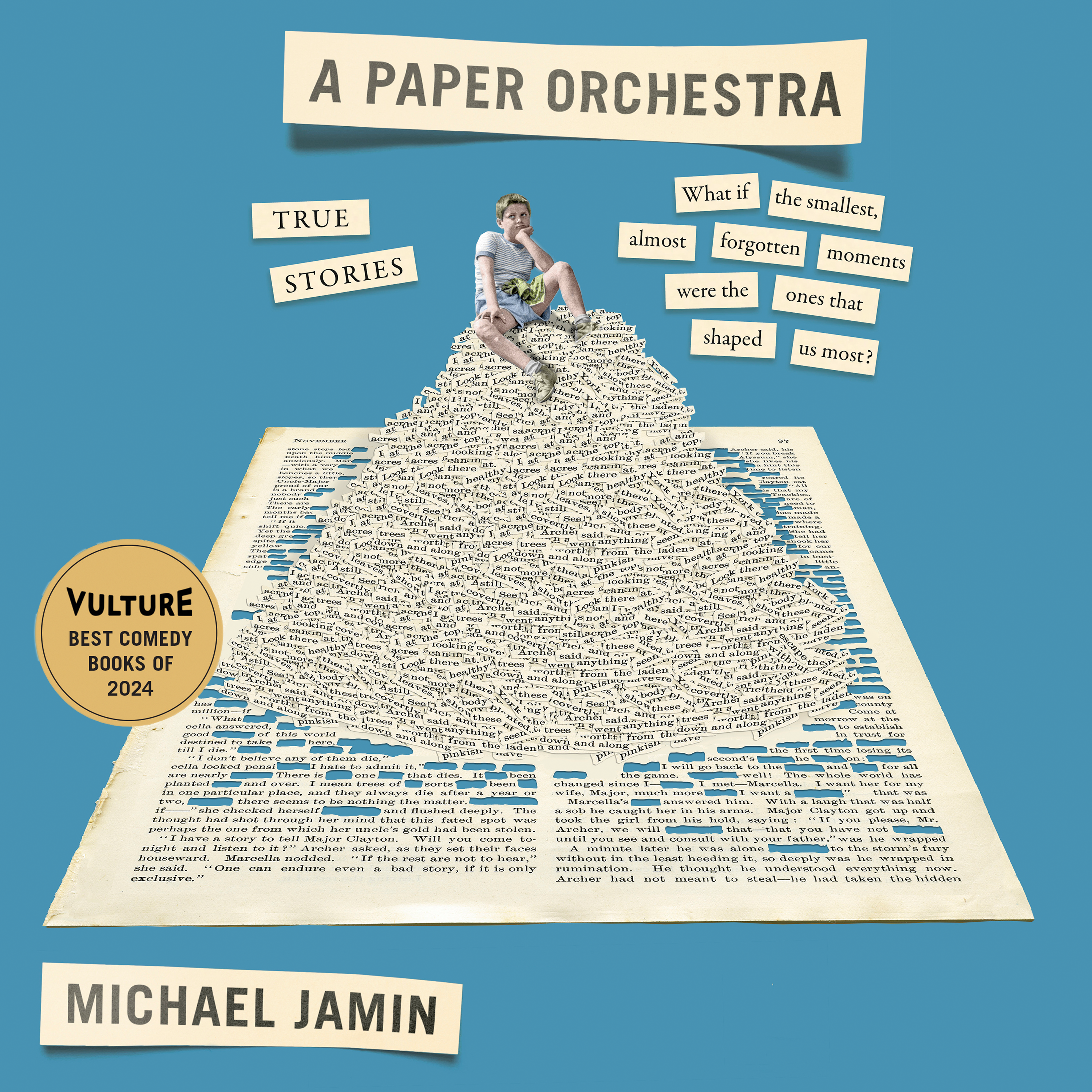
If this piece resonated, the full collection of essays is available in print, eBook, and audiobook.
This one always tears me up. I feel the same way about my relationship with my son. We’re close but not as close as I would like. I made mistakes and I wish I could change them but I’m stuck reliving my own stupidity. That’s something that will haunt me until my dying day.
This one still hits me in the gut! ❤️