

Is imposter syndrome common among professional screenwriters?
Advice from a TV writer/author

I’ve been a professional TV writer for 28 years. I’ve made my living writing on hit shows — shows you know and love — working side by side with some incredibly talented writers.
I think if you were to ask my co-workers, the majority would say they suffer from imposter syndrome. They’re just waiting for the inevitable day when Hollywood discovers who they really are and kicks them out.
Most of my colleagues don’t gloat when they sell a TV show. In fact, they don’t even want to talk about it, let alone brag.
That’s not false modesty. It’s fear. And I think this is healthy.
I think if you’re a writer who doesn’t feel some degree of imposter syndrome, there’s a high likelihood that you’re not looking at your work critically enough.

A story is like an analog watch. When you open it up, you can the gears turning. There’s a dozen of them. Some are spinning fast and some are barely moving, and yet somehow they all fit together and make the hands of the clock move.
A story works the same way. All this stuff is happening in the background. Gears are spinning, characters are making choices, events are unfolding and somehow it all fits together.
Crafting a story is hard work.
For the first eight or 10 years of my career, I was looking across at the other writers, sitting at the writer table and thinking I wasn’t nearly as good as them. I know some of them were thinking the same about me. It took years for me to get my legs.
A couple of years ago, I decided I was going to write a collection of stories, similar to what David Sedaris writes. I love his work, and wanted to write my version of what he does.
“How hard can it be?” I thought. “After all, I’m already a successful TV writer. I know what I’m doing, right?”
So I start writing these personal essays and I was pretty happy with them. I let then sit for a few months and then I read them with fresh eyes.
I was so disappointed with what I wrote.
They read like I was just doing a cheap knockoff of David Sedaris. I didn’t feel like an artist, I felt like an imitator — and not even a good one at that.
I came to realize that writing personal essays wasn’t my strong suit. They lacked the narrative structure that I employ when writing TV shows and movies.
Maybe I could take the thoughts in my head and express them as stories instead of essays.
But was I even allowed to do this? Was I allowed to write any differently than David Sedaris? After all, he’s the gold standard in this genre. He’s successful both critically and commercially.
Who was I to do it any differently?
And all of this was in my head. That’s imposter syndrome.
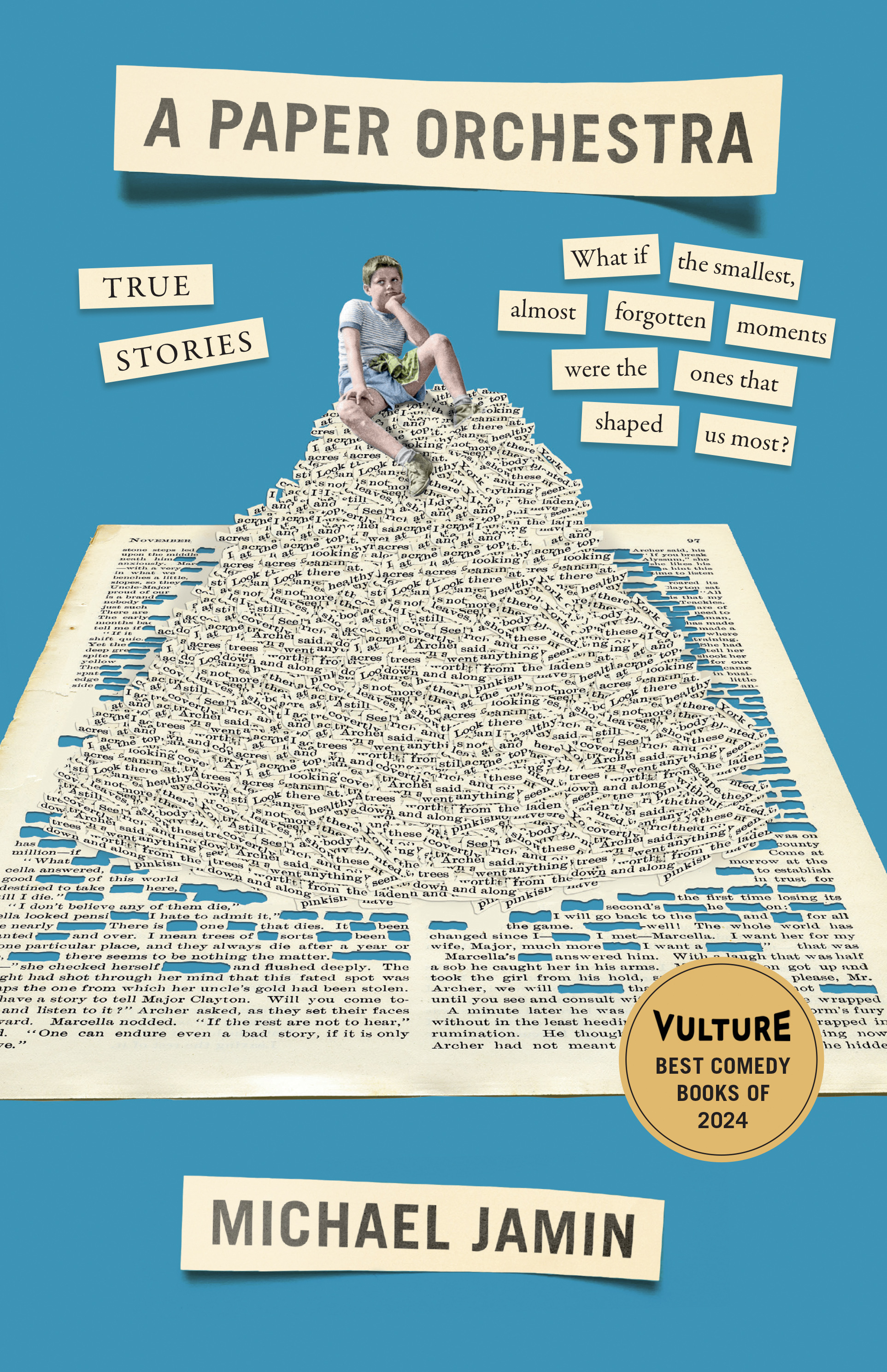
My book, A Paper Orchestra, was released in early 2024. and when you read the comments on Amazon, people love it.
No one wrote, “But it’s not David Sedaris!”
And now, as I write my next book, I’m worried that it won’t be as good as my first.
At the beginning of my career, I compared myself to other writers. Today, I’m comparing myself to me!
This is what artists struggle with every day. And if you struggle with this too, you’re in good company.